
Dental Loupes & Headlights in Canada
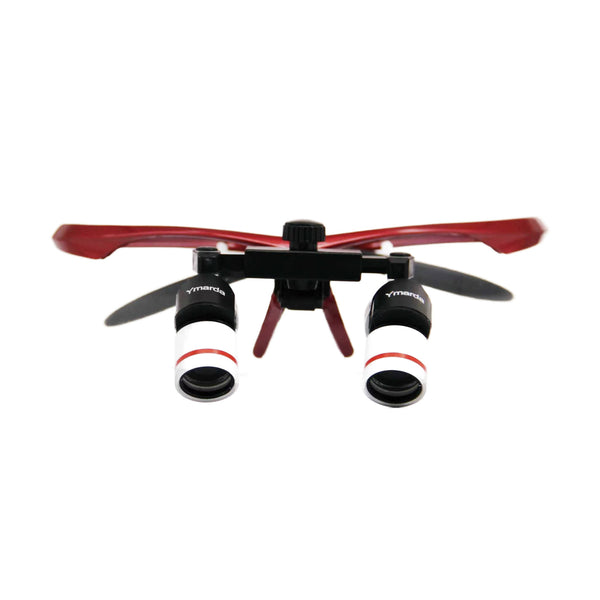
This collection holds the flip-up dental loupes and wireless headlights we stock for Canadian dental clinics, hygiene teams and dental students. Every pair here uses an adjustable flip-up mount with adjustable interpupillary distance and declination, so it can be set to the person wearing it on the day it arrives instead of being built to one fixed set of measurements. The loupes and the headlights share a universal T-mount, which means one frame can carry both magnification and light, and a lamp head you already own generally mounts on a frame bought later. Orders ship from our own warehouse in Toronto, Ontario.
- 2 options$399.00
$479.00CAD

-
Dental & Oral Care > Dental Equipment$699.00
$1,073.00CAD
More about Dental Loupes & Headlights in Canada
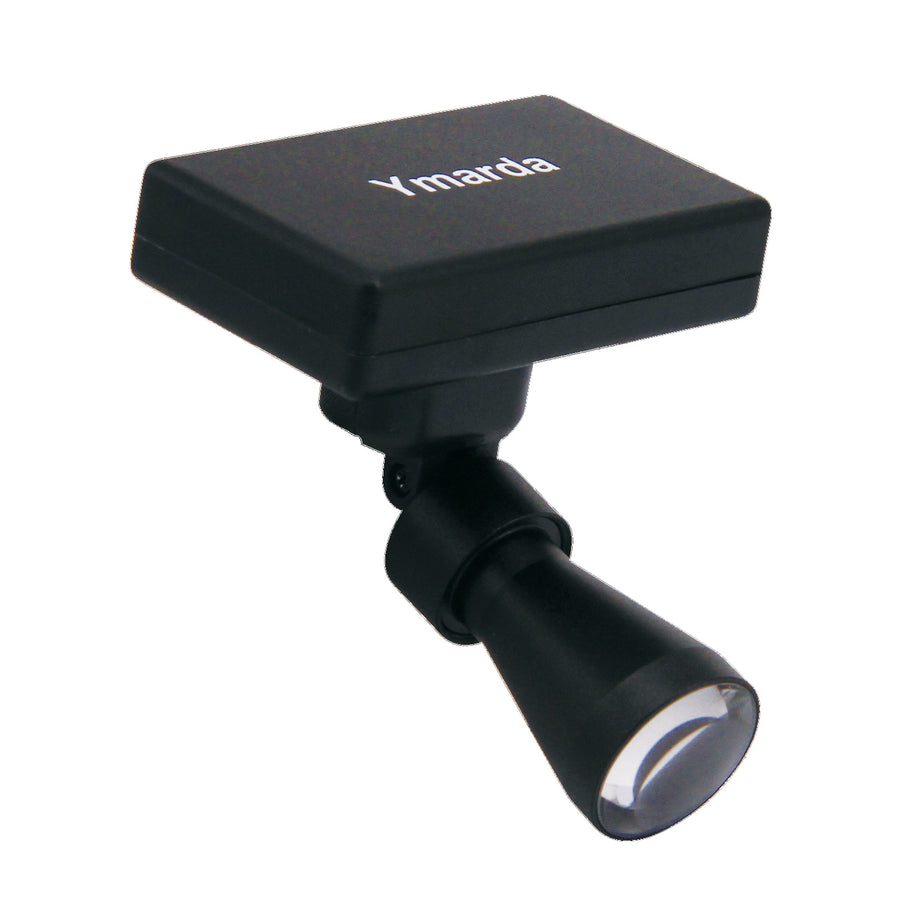
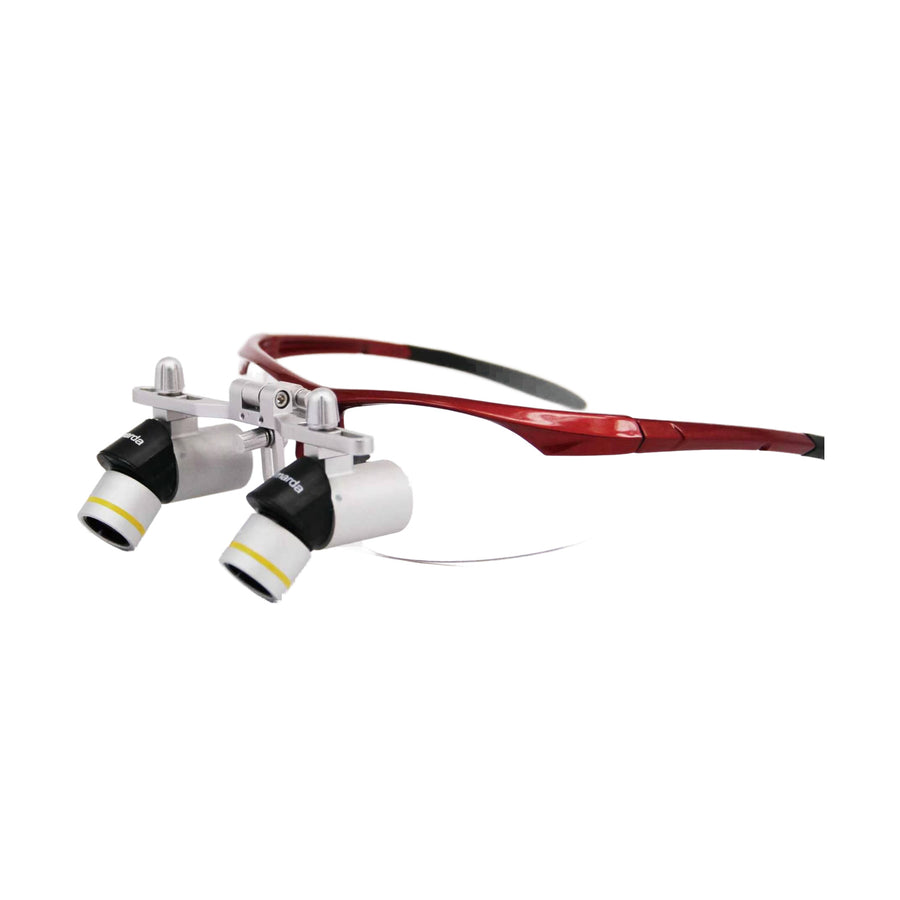
Most first orders start with one of three lines: the CliniEco Flip-Up Dental Loupes — 2.5× Magnification, Adjustable, Lightweight — $329.00 for charting, hygiene and restorative work, the CliniEco Flip-Up Dental Loupes — 3.5× Prism Optics, Adjustable, Lightweight — $699.00 for endodontics and fine margins, or the CliniEco Wireless Dental Headlight — Core, 35K Lux, Ultra-Light (for Loupes) — $349.00 on its own for a clinician who already owns a frame.
What magnification do dental loupes actually need for hygiene, restorative and surgical work?
Magnification is chosen by the work that fills the day, not by the largest number on the box. Two and a half times is the everyday step: with Galilean optics the frame shows about 90 mm of the site at a 400 mm working distance, with roughly 200 mm of depth of field, so a full occlusal surface stays in focus while you move across a quadrant. That is what charting, scaling, recall examinations and most restorative work need, and it is the pair a hygienist or a student can wear through a full day without repositioning for every surface.
Three and a half times is the detail step: prism optics narrow the frame to about 65 mm at the same 400 mm, with roughly 150 mm of depth of field. That is a tooth and its immediate neighbours, which is what endodontic access, a margin, a small restoration or a surgical site requires — and it is the wrong pair for a day of whole-arch work. The two magnifications are different optical systems rather than two settings of one, so the choice is made once, per pair.
A clinic that does both usually holds both, and assigns the 3.5× pair to the rooms where single-site work happens. Nothing has to be guessed from a specification sheet: the frame and the mount are the same across the range, so the two can be compared side by side in one appointment.
2.5x vs 3.5x: how does magnification change field of view and working distance?
Field of view shrinks as magnification rises, and that is optics rather than a limitation of one model: the same frame at the same working distance shows about 90 mm across at 2.5× and about 65 mm at 3.5×. What changes with the model you order is the optical system — Galilean for 2.5×, prism for 3.5× — and not the range of working distances. Both are offered in four positions, 350, 400, 450 and 500 mm, and the position is chosen when the pair is made.
Those are four discrete settings, not a continuous adjustment, so the working distance has to be measured before the order rather than tuned afterwards. The table below puts every line in this collection side by side on the figures printed on its own product page.

| Configuration | Optics | Field of view at 400 mm | Selectable working distance | Listing price (CAD) | What the listing includes |
|---|---|---|---|---|---|
| 2.5× pair | Galilean, multi-coated optical glass | approx. 90 mm, depth of field approx. 200 mm | 350 / 400 / 450 / 500 mm, one chosen at order | $329.00 | Loupes, protective case, microfibre cloth |
| 3.5× pair | Prism, multi-coated optical glass | approx. 65 mm, depth of field approx. 150 mm | 350 / 400 / 450 / 500 mm, one chosen at order | $699.00 | Loupes, protective case, microfibre cloth |
| 2.5× pair with Core headlight | Galilean loupes plus 35,000 lux class light at 40 cm | approx. 90 mm, depth of field approx. 200 mm | 350 / 400 / 450 / 500 mm, one chosen at order | $599.00 | Loupes, wireless headlight, 2 USB-C batteries, universal T-mount with headband, side shields, spare nose pad, screwdriver, hard case, EN/FR manual |
| 3.5× pair with Core headlight | Prism loupes plus 35,000 lux class light at 40 cm | approx. 65 mm, depth of field approx. 150 mm | 350 / 400 / 450 / 500 mm, one chosen at order | $899.00 | Loupes, wireless headlight, 2 USB-C batteries, universal T-mount with headband, side shields, spare nose pad, screwdriver, hard case, EN/FR manual |
| Core headlight only | 35,000 lux class at 40 cm, lamp head approx. 12 g | not applicable — light only | not applicable — mounts on the loupe frame | $349.00 | Lamp head, universal magnetic T-mount, headband, one rechargeable USB-C battery; spare battery optional |
| Pro headlight only | 40,000 lux or more at 40 cm, CRI 95 or higher | not applicable — light only | not applicable — universal T-mount | $449.00 | Lamp head, dual hot-swap batteries, multi-step dimming with last-setting memory, two-year warranty |
Do you need a headlight with loupes, and what does the LUX rating mean in practice?
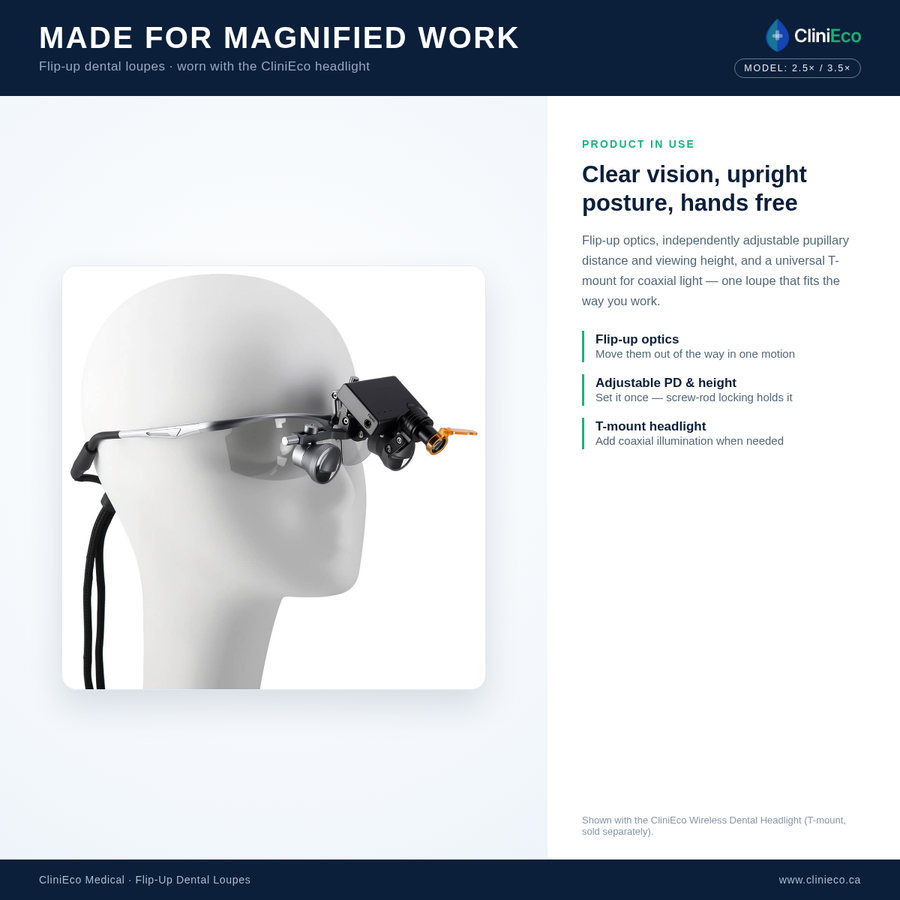
Once the frame narrows what you see, the head and the hands begin to cast shadows exactly where the detail is, and that is the argument for a coaxial light rather than a brighter room. A lamp head mounted on the loupe frame follows the line of sight, so the site is lit from the same direction you are looking, and it moves when you move instead of being re-aimed.
A lux figure only means something with a distance attached to it. Every figure we publish is measured at 40 cm — roughly the distance from the eyes to a patient's mouth in a loupe working posture. The Core is a 35,000 lux class light at that distance, with a lamp head of about 12 g, stepless touch dimming with a last-setting memory, USB-C charging in around 2.5 hours and a hot-swap battery whose spare is listed as an optional add-on. The Pro is specified at 40,000 lux or more at the same 40 cm, with CRI 95 or higher, multi-step dimming and two hot-swap batteries in the box. A very large number quoted with no distance was measured close to the emitter and cannot be compared with either.
Weight is the other half of the decision, because the frame carries it for eight hours: about 12 g at the lamp head is the figure that matters, not the brightness on a catalogue page. Lead time matters too, and it is stated rather than implied — the Pro is a first production run, its page asks you to confirm the current lead time in writing and says ship dates are confirmed within one business day, which is why the Core is the line to order when light is needed this week.

How do you fit loupes to a clinician — working distance, declination angle and interpupillary distance?
Working distance comes first, because it is the one setting that cannot be changed after the pair is built. Measure it in the posture you actually work in: sit or stand as you would at the chair, close your eyes, let the arms drop naturally, then open them and have a colleague measure from your eyes to your hands. Most clinicians land near 400 mm; shorter clinicians and those who work seated close to the arch often need 350 mm, while taller clinicians, or those working with the patient reclined further away, need 450 or 500 mm.
The rest adjusts on the frame. Interpupillary distance adjusts so that both optics line up with the pupils, declination adjusts the angle of the optics to the natural line of sight, and ocular height sets them at eye level. On a flip-up mount the optics also lift out of the way between patients without the frame coming off. Because all three of those stay adjustable, one pair can be handed to a colleague — provided the two of you work at the same distance, since that is the setting fixed at order.
Custom loupes are built to one person's measurements, and for a single user whose posture will not change they are a reasonable purchase. What they are not is shareable, fast to replace, or adjustable when a second clinician joins the practice; the pair in this collection is not a substitute for a custom fit where a fixed, individually cut declination is what you want.
What should a Canadian clinic check before buying — invoice, warranty, service and MDEL distribution?
Six things, and all six are on paper. First, the invoice: it should name the exact configuration ordered, including the working distance, because a 350 mm pair and a 500 mm pair are different physical products and a wrong line on the invoice is a wrong pair in the room. Second, currency and tax: a Canadian distributor invoices in Canadian dollars with GST or HST shown separately, so the amount is claimable as an input tax credit by a registered clinic without a currency conversion. Third, the distributor's establishment licence number — CliniEco Medical distributes these products under MDEL #35334, and the number on the package identifies the licence holder. Fourth, warranty terms in writing: the Pro headlight carries a stated two-year warranty supported from Toronto, and every other line follows the returns terms printed on its own product page, which is 30 days on unopened or faulty items. Fifth, where service happens: a replacement battery or a repair should not need a parcel to another country. Sixth, lead time in writing before a purchase order is committed to a date.
The table below sets out how those checks differ on each side of the border.
| Check | Canada | United States |
|---|---|---|
| Invoice currency and tax | Canadian-dollar invoice from a Canadian distributor, with GST or HST itemised and claimable as an input tax credit by a registered clinic | US-dollar invoice from a US seller; card conversion applies and sales tax rules vary by state |
| Distributor licence number | The establishment licence number of the Canadian distributor is printed on the package and the paperwork (MDEL #35334) | A US seller's own registration or listing does not cover importation into Canada |
| Freight and customs | Domestic shipment from a Canadian warehouse: no customs entry and no brokerage fee | A cross-border shipment can carry a customs entry, brokerage and duty on arrival |
| Service and repairs | Handled domestically, with warranty support based in Toronto | Routed through the seller's own US service network, and the parcel leaves the country |
| Returns | 30 days on unopened or faulty items per the product page, returned within Canada | Return freight and any duty refund cross the border, which usually adds time |
How many loupes does a clinic of 3, 6 or 10 operatories actually need?
Count clinicians, not chairs. A pair belongs to the person wearing it, because the working distance is fixed at order, so the number is set by how many clinicians are scheduled in a week rather than by how many rooms exist. Two clinicians who work at the same distance can share one pair — that is the reason to buy flip-up rather than custom — but a room cannot wear a pair on its own.
Light follows the same logic with one refinement: because the T-mount is standard, a lamp head can move between frames. A clinic can therefore hold one light per clinician who uses illumination, or one per pair in the rooms where it is used, and keep the spare battery with the light. Where a light has to run through long sessions, the dual-battery line is the one that keeps working through a swap; for routine hygiene and restorative work, the lighter 35,000 lux lamp head is the everyday choice.
The table below is a staffing assumption to check against your own roster rather than a clinical recommendation. What it shows is the pattern: a ten-operatory clinic is a ten-pair conversation, not a ten-light one.
| Operatories | Clinicians typically scheduled | Loupe pairs | Headlights | Typical order pattern |
|---|---|---|---|---|
| 1 to 2 | 1 to 2 — a solo dentist, with or without one hygienist | 1 to 2 | 1 to 2 | One 2.5× pair to start, in the configuration the main procedure needs; add a second pair when a second clinician is booked at the same time |
| 3 | 3 — one dentist and two hygienists | 3 | 3 | Two 2.5× pairs for hygiene and restorative work, one 3.5× pair for endodontic and margin work, a light on each frame |
| 6 | 6 — two dentists, three hygienists and one associate | 6 | 5 to 6 | A 2.5× and 3.5× split by room, with one set (pair and light in a single carton) covering the shared operatory |
| 10 | 10 — four dentists, five hygienists and one associate | 10 | 8 to 10 | 3.5× pairs in the endodontic and surgical rooms and 2.5× pairs for hygiene, lights throughout, and the dual-battery light where a session cannot stop |
Where can you order each configuration today?
Every line in this collection is orderable now, and each one ships from the Toronto warehouse except the Pro headlight, which is a first production run and should have its lead time confirmed before you commit to a date.
- CliniEco Flip-Up Dental Loupes — 2.5× Magnification, Adjustable, Lightweight — $329.00
- CliniEco Flip-Up Dental Loupes — 3.5× Prism Optics, Adjustable, Lightweight — $699.00
- CliniEco Dental Loupes + Wireless Headlight Set — 2.5×, Adjustable (Mid Tier) — $599.00
- CliniEco Dental Loupes + Wireless Headlight Set — 3.5× Prism Optics, Adjustable, with Core 35K Lux Headlight — $899.00
- CliniEco Wireless Dental Headlight — Core, 35K Lux, Ultra-Light (for Loupes) — $349.00
- CliniEco Wireless Dental Headlight — Pro, 40K Lux, Dual Battery — $449.00
If you are sizing a purchase rather than buying one pair, the clinic supply planner turns rooms and clinicians into quantities and prints a checklist you can keep; a practice ordering for several operatories or several sites starts at the wholesale ordering desk.
Related reading
- Where to Buy Flip-Up Dental Loupes for Dental Clinics in Canada
- Where to Buy Dental Loupes + Wireless Headlight Set for Dental Clinics in Quebec
CliniEco Medical distributes these products under MDEL #35334. Specifications, pack contents and prices above are those printed on each product page; the product page is the record if a number here and a number there ever disagree.