
For Massage & Wellness Studios
Five consumables carry a massage or wellness studio through a client day: table paper, a disposable sheet, a fluid-resistant gown for the client who needs one, a procedural mask, and hand sanitizer at the point of care. Each is chosen by table size, by what gets changed between clients, and by the case count the room draws in a month.




-
Sterilization & Infection Control > Cleani...$54.99CAD
-
Case of 12 rolls$52.99CAD
-
Protection & Single-Use > Hand Hygiene$54.99CAD



More about For Massage & Wellness Studios
What has to be changed between clients, and what does the college expect?
Ontario's Standard of Practice for massage therapy sets the floor rather than the ceiling: the practitioner follows Public Health Ontario's recommendations for cleaning and disinfecting the practice setting, and uses cleaned and disinfected linens and covers for each client — sheets, pillow cases and face-cradle covers included. Table surfaces, face cradles and anything the client contacts are cleaned and disinfected between clients, and the linens or covers that touch skin are single-client items. (CMTO, Standard of Practice: Safety and Risk Management and Infection Prevention and Control, checked 2026-11-14.)
That single sentence is what makes the consumable order look the way it does: a studio does not count boxes, it counts client contacts. Every item below is measured against the number of client visits per week, because that is the figure the standard's between-client change actually generates.
How far does one roll of table paper go?
The arithmetic is worth doing once, because it decides the case count. A 21 inch × 225 ft roll holds 2,700 inches of paper. A table run that covers the length of the table plus a hand's width at each end takes roughly 30 inches, so the roll gives about 90 table runs, and the case of twelve rolls gives roughly 1,080. A two-room studio seeing twelve clients a day therefore draws about twelve runs a day and works through a case in something around three months — which is the point at which the reorder should already be placed, not the point at which the roll runs out.
Width is the other half of the fit. Twenty-one inches (53.3 cm) suits a padded or upholstered table that is wider than a bare couch, and the surface is measured rather than the frame: a roll narrower than the surface leaves a strip of vinyl at each edge, and that strip is what the next client lies on. The examination table paper, smooth, 21 in × 225 ft, case of 12 rolls is the roll this arithmetic is built on.
Paper or a disposable sheet — which one covers the table?
Paper covers the contact run; a sheet covers the client. A smooth paper roll is pulled down the length of the table for the area a client's body and hands rest on, and it is the cheaper item to change between every client. A non-woven sheet is draped over the table or the client for warmth and modesty, and in a studio that works with draping it is the item that has to be intact, not merely present. Studios that use both keep the paper as the between-client item and the sheet as the per-client drape.
The disposable bed sheets, non-woven, 36 × 80 in are sold as an eight-pack holding eight packs of a hundred, 800 sheets in all — about 66 client contacts on a twelve-visit day, which puts the sheet on a two-month cycle for a two-room studio rather than a weekly one.
Does a wellness studio need a gown and a procedural mask?
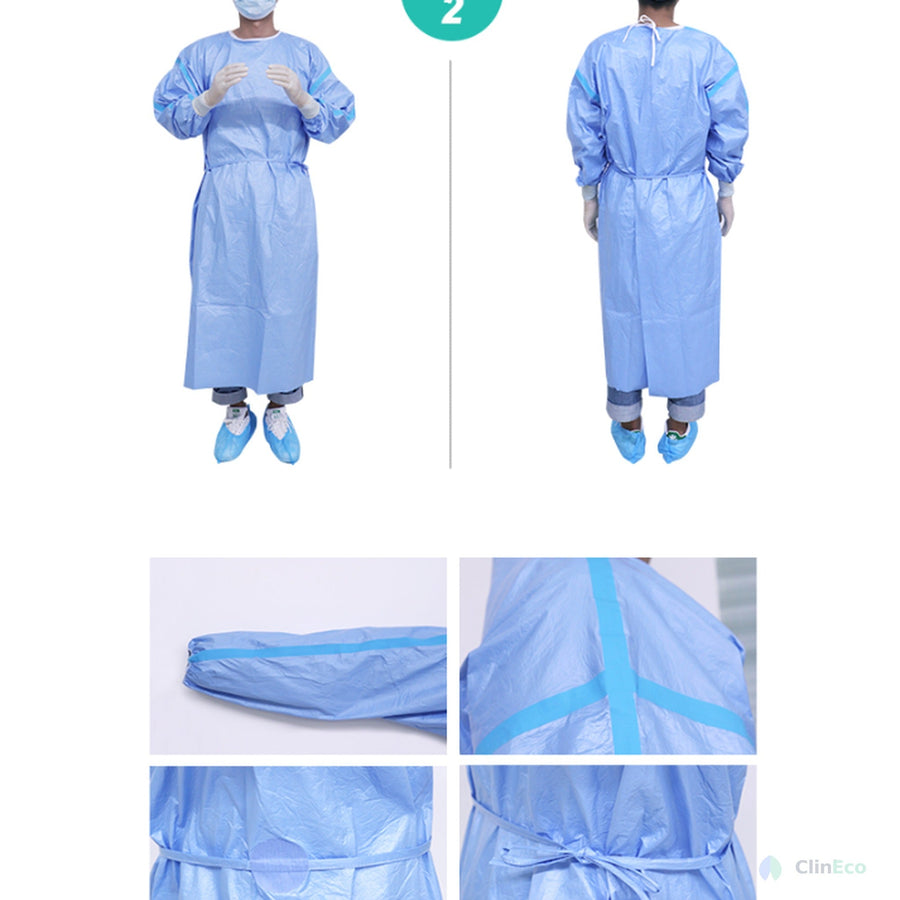
Not on every visit, and that is exactly why they are stocked in the smallest practical pack instead of the largest. A gown is worn where a task can produce contact with blood, body fluids or a splash; the level on the label describes the barrier, and the levels are not interchangeable. AAMI PB70 Level 1 is the entry tier — impact penetration tested by AATCC 42 at 4.5 g or less — and it is intended for minimal-fluid-risk contact such as routine care, not for tasks that generate spray or aerosols, which call for a higher tier of the same standard.
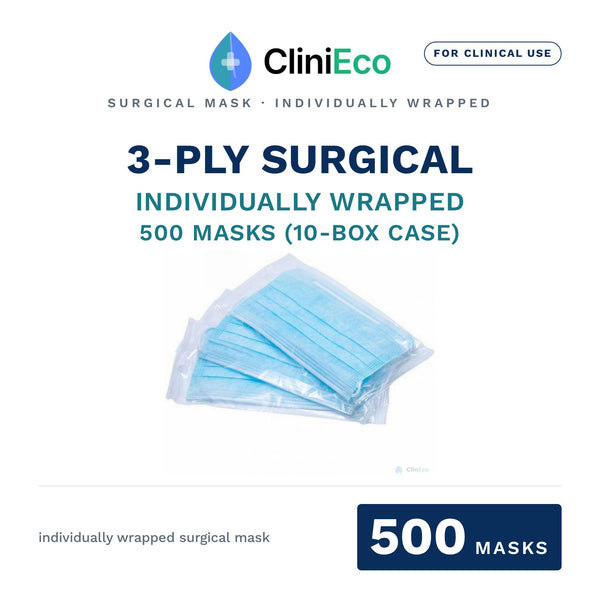
Masks follow the same logic through a different standard: ASTM F2100 levels describe filtration and fluid resistance, and the level is matched to the task rather than to the room. The disposable isolation gowns, AAMI PB70 Level 1, non-woven and fluid-resistant and the ASTM F2100 Level 3 face masks, 250 per case are both listed at the quantity a studio or small clinic can hold without the stock going out of date before it is used.
Where does hand hygiene sit in a studio's routine?
At the point of care, which in a treatment room means the practitioner's hands before and after contact and the client's hands at entry. A pump bottle at the table is the item that gets used; a bottle kept at reception is the item that gets forgotten. The Aurelia DermaSeptyl hand sanitizer clinic pack, NPN 80122015, 12 × 60 ml is the format that puts a bottle in reach of each table and each treatment room, and the NPN on the label tells a buyer which regulatory route the product was authorised under — a natural health product number rather than a drug identification number, which is how antiseptic hand sanitizers are filed in Canada.
What does a month of consumables look like in numbers?
| Item | Unit sold | Case or pack | Per-client use | Draw at 12 clients a day |
|---|---|---|---|---|
| Examination table paper, 21 in × 225 ft | Roll | 12 rolls per case | One run per client, about 30 in | About 1 case per quarter |
| Disposable bed sheets, 36 × 80 in | Sheet | 8 packs of 100, 800 per case | One drape per client | Roughly 66 client days per case |
| Isolation gowns, AAMI PB70 Level 1 | Gown | 9 per pack | Task-based, not per client | Reserve stock for splash-risk tasks |
| Face masks, ASTM F2100 Level 3 | Mask | 250 per case, 5 boxes of 50 | One per procedure or shift | Replace when the box is opened |
| Hand sanitizer, NPN 80122015 | 60 ml bottle | 12 bottles per clinic pack | Before and after each contact | One bottle per table in rotation |
What is the reorder trigger, and where is it read from?
Set the trigger on weeks of cover rather than on an empty shelf: the table paper at two thirds used, the sheet case when the last full pack is opened, the mask box when the reserve drops below one case. Each product page is the only place the current variant, price, stock state and pack count should be read from, because pack counts differ between lines and a case of 250 masks is not the same picking unit as a pack of nine gowns. Studios running more than two rooms, or booking therapists on contract, can set a standing order through the account enquiry page so the consumables arrive on a cycle instead of on an emergency.
Consumables on this page are sold as described by their manufacturers and by the standards named on each product page. Nothing here is medical advice or a claim of clinical effect; barrier level, change frequency and cleaning procedure are decided by the practitioner and by the standards their college applies.
CliniEco Medical distributes these products in Canada under MDEL #35334, shipping from its Toronto warehouse.