
Micro Tubes & PCR
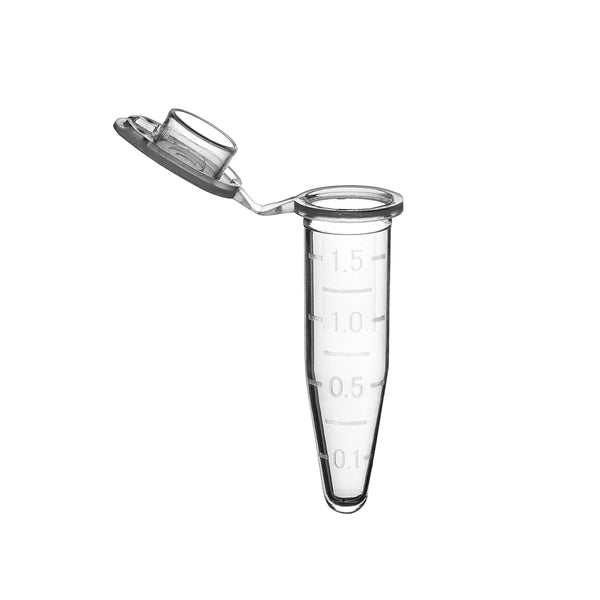
The SureSeal S 1.5 mL tube is the general-purpose tube on most molecular benches: conical, graduated, moulded in BioClear co-polymer, sterile and nuclease free, with an attached snap cap that cannot be dropped or cross-threaded. This collection lists the 500-tube pack in clear, six colours and opaque black, packed either as one self-standing bag or as ten bags of 50, so a bench can hold a single tube format across digests, isolations and storage.
-
9 options$26.99
$29.99CAD
More about Micro Tubes & PCR
The item on this page is the MTC Bio SureSeal S 1.5 mL sterile microcentrifuge tubes with snap cap, 500 per pack. Prices in the tables are the live listing prices as of 2026-11-23.
What is a SureSeal S 1.5 mL tube, and what does one pack contain?
It is a conical microcentrifuge tube with a nominal volume of 1.5 mL, graduated, moulded in BioClear co-polymer, supplied sterile by electron beam irradiation and tested up to 28,000 × g. The closure is an attached hinged snap cap with a ring-and-groove seal and a 2 mm syringe-permeable circle. One pack holds 500 tubes in a self-standing bag, plus ten Stop-Pops locking clips on every bag.
The tube is RNase free, DNase free and pyrogen free, and the cap carries a frosted writing surface for pencil. The gusseted bag stands upright on the bench, so a shared bench works straight out of the bag.
| Property | Detail |
|---|---|
| Nominal volume | 1.5 mL |
| Tube style | Conical bottom, graduated, self-standing in bag |
| Material | BioClear co-polymer, advanced polypropylene |
| Closure | Attached hinged snap cap, ring and groove liquid-tight seal, frosted writing surface |
| Centrifugal strength | Tested up to 28,000 × g |
| Usable temperature range | −90 °C to +121 °C |
| Nuclease and pyrogen status | RNase free, DNase free, pyrogen free |
| Sterility | Sterile as standard, by electron beam irradiation |
| Pack configuration | 500 tubes per pack, self-standing bag; also ten bags of 50 |
| Included with each bag | Stop-Pops cap locks, 10 per bag |
Does the tube survive the rotor and the freezer?
Yes, within its stated limits: the tube is tested up to 28,000 × g and its usable range runs from −90 °C to +121 °C, which lets one tube go from a −80 °C freezer into a boiling water bath without a material change. Check the g-force rating against the rotor actually run, because a tube rated below the rotor fails during the run.
Which pack format should be ordered: one 500-tube bag or ten bags of 50?
Both formats deliver 500 sterile tubes. One 500-tube self-standing bag is the lower cost per tube and suits a bench pulling tubes steadily through a shared workflow. Ten bags of 50 keeps the rest of the stock sealed while one small bag is in use, the usual arrangement for clean benches and cell-culture rooms. If unsure, start with the single bag.
| Colour | Pack format | Where it fits |
|---|---|---|
| Clear | One 500-tube self-standing bag | General molecular work where the pellet and liquid level must be visible |
| Clear | Ten bags of 50 | Clean benches and cell-culture rooms that keep stock sealed until use |
| Blue, red, green, orange, purple, yellow | One 500-tube self-standing bag each | One sample type, protocol or operator per colour across a shared bench |
| Opaque black | One 500-tube self-standing bag | Light-sensitive reagents and fluorescent work where stray light must not reach the sample |
Which colour should be ordered, and what does colour code here?
Colour is a workflow tool rather than decoration. Clear is for anything inspected visually, one colour per sample type or per operator keeps a shared bench apart, and opaque black is for photolabile reagents. The colour is in the tube body, not a coating, so it does not rub off in a water bath.
What does a pack cost, and what is the per-tube figure?
A clear 500-tube pack is CAD $29.99, price as of 2026-11-23, which is just under 6 cents a tube: 29.99 divided by 500 is 0.06. A blue pack is CAD $26.99, about 5.4 cents a tube, and the ten-bags-of-50 clear pack is CAD $29.99 for the same 500 tubes. The per-tube figures are arithmetic on each pack price, not a second price schedule.
How should the packs be stored, labelled and lot-tracked?
Keep unopened packs at room temperature, away from direct sunlight and solvent vapours. Sealed sterile consumables do not need refrigeration, cold storage wets the bag with condensation on removal, and the pack must not be autoclaved because the bag is not designed for a second cycle. An opened bag is working stock: closed between uses, off the floor, out of the fridge.
Label the tube body or the cap rather than the bag, and use the frosted cap surface with pencil for storage work. For traceability, record the lot number from the bag label against the date the bag was opened and the bench it was assigned to, and request the certificate of analysis with that lot number when an audit file needs it.
What should be confirmed before ordering?
Three things. Whether the closure must be turned rather than pressed: vapour-phase nitrogen storage needs a screw-cap tube and every tube here uses a snap cap. What volume the workflow holds, since 20 µL to 500 µL sits comfortably, about 1 mL is the practical ceiling for repeated freeze-thaw, and above that a 2.0 mL tube. And whether the work is thermal cycling, which needs a thin-walled PCR tube.
Locking clips are supplied ten to a bag and are the configuration for tubes stored at −20 °C or −80 °C, heated, boiled or carried between sites. Individual packs can be mixed within one order, so clear and two colours can ship together.
The same bench usually reorders tubes alongside other labware, and the clinic supply and cost planner models pack counts against monthly usage. Two of our guides carry the surrounding rules: which standards and labelling apply to microcentrifuge tubes in Canada and the United States, and which specimen rules apply to PCR tubes in Canada and the United States.
Packs ship from local stock, and both the Canadian and United States storefronts fill from the warehouse that serves the destination country. Quantities above the standard pack size are confirmed against availability before the order is placed.