
Autoclave Monitoring & Spore Testing
Why this category is different: every indicator we sell carries what an auditor asks for — organism, spore population, readout time, and lot number with expiry — so a pass can be traced back to the load it challenged. CliniEco Medical holds Health Canada establishment licence #35334 as an importer and distributor; ask us for the lot certificate of analysis for the lot you are buying and we will send the manufacturer's issued copy.


-
Sterilization & Infection Control > Steril...$249.99CAD
-
Bundles & Subscriptions > Monthly Supply, ...$1,499.00CAD
More about Autoclave Monitoring & Spore Testing
Autoclave Monitoring & Spore Testing for Canadian Dental Clinics
CliniEco Medical supplies complete sterilization monitoring solutions for dental offices, veterinary clinics and laboratories across Canada. Every product in this line is specified against the ISO standards that govern sterilization monitoring, and the specification and certificate for each item are listed on its product page.
Why Sterilization Monitoring Matters
Every dental autoclave cycle needs verification: physical indicators (pouches, rolls, tape), chemical indicators (Class 4 & Class 5 integrators) and biological indicators (spore tests). Provincial dental regulators (in Ontario, the RCDSO) require documented cycle monitoring for every sterilizer that is used. Our sterilization monitoring lineup covers all three levels. Pairs with our ultrasonic cleaning solution for the reprocessing step before the autoclave cycle.
Sterilization Monitoring Products We Carry
- Sterilization Pouches — self-seal paper/plastic pouches with Class 4 dual indicators, assorted sizes, 200-pack
- Sterilization Rolls — pre-cut sheets, 50m rolls, for wrapping instruments of any length
- Autoclave Indicator Tape — steam sterilization tape, 3-roll set, lead-free
- Chemical Integrators (Class 5) — multi-parameter integrators for precise cycle verification
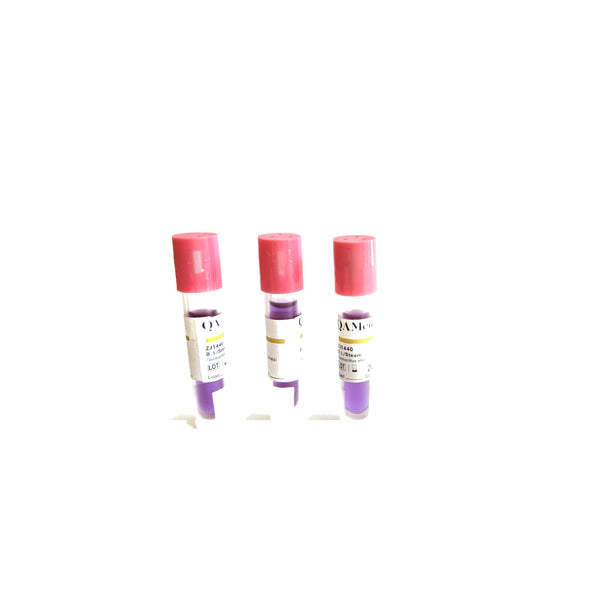
- Biological Indicators — 24h rapid readout spore tests (Geobacillus stearothermophilus)
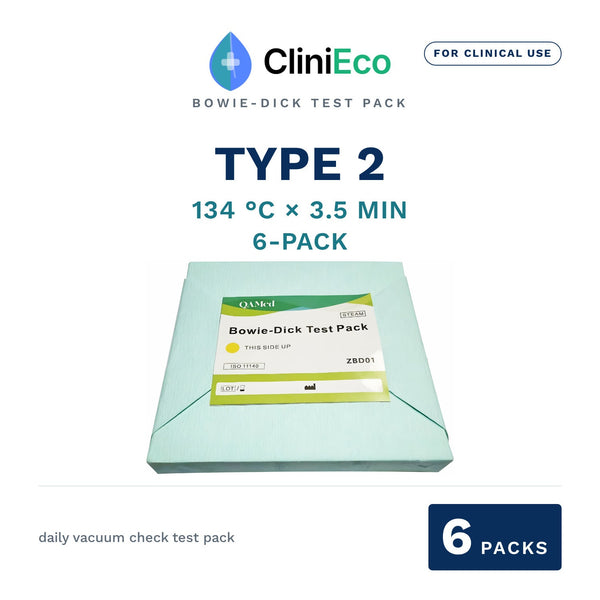
- Bowie-Dick Test Packs — daily prevacuum sterilizer testing
Which monitoring products do I need — and what do they cost?
Sterilization monitoring is a set of four different jobs, not one product. Below is what each item does and what it costs per unit, so you can size a program instead of buying pieces.
| Item | What it checks | Pack size | Price | Unit cost |
|---|---|---|---|---|
| Biological indicator, 24-hour | Whether the cycle actually killed spores — the direct evidence of sterilization | 25 / 50 | $69.99 / $109.99 | $2.80 / $2.20 per test |
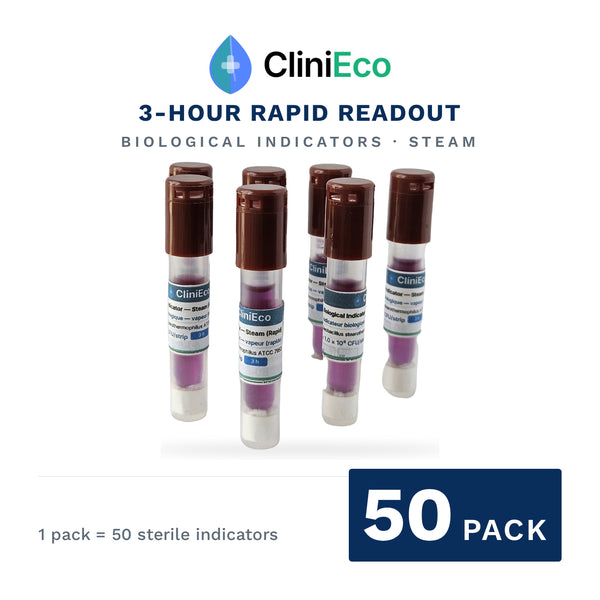
| Biological indicator, 3-hour rapid readout | Same question, answered the same shift instead of next morning | 50 | $249.99 | $5.00 per test |
| Class 5 chemical integrator | Whether the load met its critical parameters — the load-release signal | 100 / 200 | $19.99 / $32.99 | $0.20 / $0.165 each |
| Bowie-Dick test pack (Type 2) | Air removal and steam penetration in pre-vacuum cycles | 6 | $14.99 | $2.50 per pack |
| Autoclave indicator tape | External process indicator — routing and pack identification, not proof of sterilization | 3 rolls | $19.99 | — |
| Sterilization pouches, Class 4 dual indicator | Internal Class 4 indicator read through the film, plus external Class 1 | 200 per box (10" × 15" is 100 per box) | $4.49 – $19.99 | $0.022 – $0.18 per pouch |
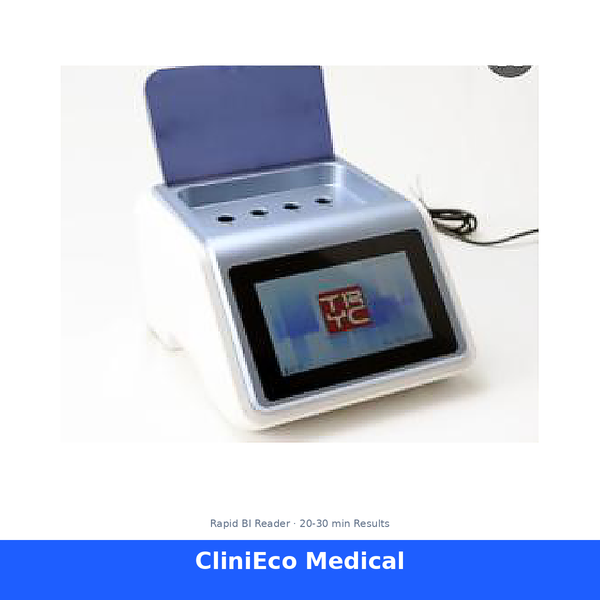
| Biological indicator incubator | Incubation at controlled temperature so the indicator can be read | 24-well / 20-well | $379.00 / $599.00 | — |
How the classes fit together
Four different signals, four different jobs — and only one of them is evidence that the load is sterile:
- Class 1 (indicator tape, external): shows the pack went through a process. Useful for routing and for telling processed packs from unprocessed ones. It is not proof of sterilization.
- Class 4 (inside the pouch): multi-parameter indicator that responds to time, temperature and steam. Read through the film, before the pouch is opened.
- Class 5 (integrator): designed to respond to all critical parameters across the stated range, which is why it is used as the load-release signal. One per load, alongside the biological indicator.
- Biological indicator: live spores. The only item in this list that answers "did the cycle kill?" — and therefore the only one that provides evidence rather than an inference.
A tape mark and a colour change tell you the autoclave ran. A biological indicator tells you it worked.
Choosing an incubator: well count and readout time
The incubator is chosen by how many indicators you run at once and what readout time you buy. Two options in this range:
| Model | Wells | Price | Fits |
|---|---|---|---|
| CliniEco 24-Hour, precision dry block | 24 | $379.00 | Multiple sterilizers or cycle types read in the same window |
| DLAB HB105-S1 LED dry bath with lid | 20 (5 × 4) | $599.00 | 20 wells (Ø 11 mm); the lid holds temperature and keeps dust out over the full 24-hour run |
Rule of thumb for the well count: one well per indicator per cycle type per sterilizer, plus one control. A clinic running two sterilizers and two cycle types needs four wells in the same window — a 20-well block covers that with room for controls.
Confirm 110–120 V for a Canadian site, and ask whether the unit ships with a calibration certificate.
What a starter program costs
A single-sterilizer dental clinic starting from nothing needs four things, and the arithmetic is short:
- One box of 200 pouches (3.5 × 9): $7.50
- One 3-roll tape set: $19.99
- One 100-pack of Class 5 integrators: $19.99
- One 25-pack of 24-hour biological indicators: $69.99
That is $117.47 before an incubator, and it covers the four monitoring jobs for roughly a month at low volume.
The pre-assembled version of the same idea is the Sterilization Compliance Assistant Kit at $249.00: one month of 24-hour biological indicators (50 tests, including the control), 24 Bowie-Dick packs, 800 sterilization pouches and a 3-roll tape set. If your volume is close to that, the kit is cheaper than buying the same components separately; if your volume is lower, buy the pieces.
Buying the 50-pack instead of the 25-pack drops the cost per test from $2.80 to $2.20; the 3-hour rapid readout sits at $5.00 per test and buys you the answer the same shift. That is the trade to make deliberately — price per test against how long you are willing to wait for the result.
Standards & Compliance
- ISO 11140-1 — Chemical indicators
- ISO 11138 — Biological indicators (spore strains)
- ISO 11607 — Packaging for terminally sterilized medical devices
- ISO 11140-5 — Bowie-Dick type tests
- ISO 13485 — Quality management system
Frequently Asked Questions
What is sterilization monitoring?
Sterilization monitoring verifies that an autoclave cycle actually killed microorganisms. It uses physical, chemical and biological indicators to confirm steam penetration, temperature and exposure time in every load.
What is the difference between Class 4 and Class 5 chemical indicators?
Class 4 indicators (multi-variable) respond to two or more critical variables. Class 5 integrators (multi-parameter) respond to ALL critical variables and are the closest chemical equivalent to a biological indicator.
How often should a dental office run a biological spore test?
Ontario's dental standard requires a biological indicator with a control test once daily for each type of cycle; weekly is the U.S. CDC baseline, not the Ontario requirement. Bowie-Dick tests are run daily in prevacuum sterilizers.
Where to buy sterilization monitoring supplies in Canada?
CliniEco Medical is a Canadian medical supply distributor serving dental clinics, veterinary clinics and labs nationwide. Order online or request a B2B quote for facility pricing. Health Canada establishment licence #35334 (importer and distributor).
Free tool: generate a sterilization log sheet in about a minute — RCDSO 5542 field set, no sign-up, export to CSV or print.
Which sterilization monitoring products do I need for a dental clinic?
A complete programme uses three things together: a chemical indicator inside every load, autoclave tape on every package, and a biological indicator (spore test) for routine verification. Most dental clinics use Class 4 or Class 5 chemical indicators, 24-hour spore tests, and keep the records for the retention period their college requires.
How often do I need biological indicator testing in Ontario?
Ontario's dental standard requires a biological indicator, with a control test, once daily for each type of cycle — that is one test per sterilizer on each day it is used, not weekly. Weekly spore testing is the U.S. CDC baseline, not the Ontario requirement.
How much does sterilization monitoring cost per month?
For one autoclave used five days a week in Ontario — about 22 spore tests a month — a 25-pack of 24-hour biological indicators at $69.99 covers the month. Adding a box of Class 4 pouches and a 100-pack of Class 5 integrators brings a single-autoclave monitoring programme to about a month of coverage; the current price of each item is on its product page.
Institutional supply: Clinic supply solutions · Institutional account pricing · Free sterilization log tool
Would rather not reorder each item separately? monthly sterilization monitoring subscription — three practice-size packs, one invoice.