
Bed Sheets & Underpads
Adult briefs, disposable bed sheets and underpads for Canadian clinics and long-term care, listed by size and absorbency. Everything on this page is the layer that sits under the patient: a 36 × 80 in sheet for a bed, treatment table, stretcher or massage table, and a 30 × 36 in or 60 × 90 cm underpad for the bed beneath a brief. The briefs are here on the same requisition, because a floor buys the two layers together — the absorbency levels and the resident-by-resident selection method live on the incontinence care catalogue.
- Bulk Case (120 Pack)$298.80
$351.60CAD - Bulk Case (120 Pack)$202.80
$238.80CAD - Bulk Case (120 Pack)$238.80
$280.80CAD

-
Wound & Incontinence Care > Incontinence Care$39.99CAD


More about Bed Sheets & Underpads
What size surface does a 36 × 80 in disposable bed sheet cover?
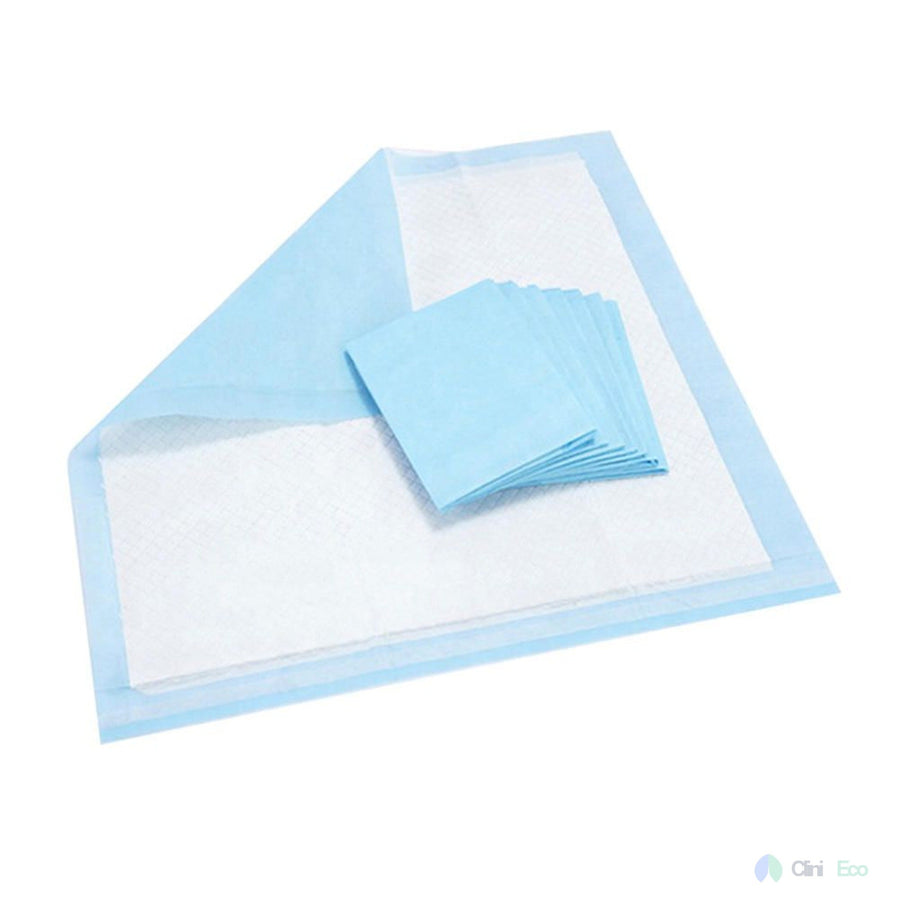
36 × 80 inches is 91 × 203 cm, which is the cut for a single bed, a treatment table, a stretcher or a massage table. The non-woven version is spun-bond polypropylene at a fabric weight in the 35 to 45 g/m² band, which is light enough to drape without stiffness and heavy enough that it does not tear at the corner when a patient shifts; the PLA version is the same 36 × 80 in cut at 40 gsm. A wider couch or a bariatric frame leaves an uncovered strip at the edge, and overlapping two sheets to make up the difference puts a ridge under the patient, so measure the surface before a standing order is written rather than after.
Where does each underpad size belong — 30 × 36 in or 60 × 90 cm?
The two sizes do two different jobs, and most floors end up stocking both. The 30 × 36 in pad is the repositioning pad: it sits under the hips and travels with the resident during a turn, so it is sold as a 4-pack for a single bedroom or a home-care programme trying the absorbency first, and as a 50-count case in the PLA version for a home that separates compostable waste. The 60 × 90 cm pad spans the bed rather than the patient: five layers with a SAP core, vacuum compressed so a store room holds more pads per shelf, and packed as ten boxes of fifty — 500 pads to the case.
| Item | Construction | How it ships | Where it sits |
|---|---|---|---|
| 36 × 80 in bed sheet, non-woven | Spun-bond polypropylene, 35 to 45 g/m² | Eight packs of 100, 800 sheets to the case | Single bed, treatment table, stretcher |
| 36 × 80 in bed sheet, PLA | Polylactic acid backing, 40 gsm, same 36 × 80 in cut | 10-pack | The same surfaces, where compostable waste is separated |
| 30 × 36 in underpad | Heavy absorbency, disposable or PLA biodegradable backing | 4-pack; 50-count case in PLA | Under the hips, moved with the resident on a turn |
| 60 × 90 cm underpad | Five layers with a SAP core, vacuum compressed | Ten boxes of 50, 500 pads to the case | Full bed width, under a brief, overnight |
How many sheets does a floor open in a week?
Count bed changes, not beds. One sheet is opened per change and discarded at the end of it, so a 40-bed floor changing linen twice a day opens about 80 sheets a day. A case of 800 is ten days at that rate, which is the figure the order point should be set on: keep one case in reserve and reorder when the store room opens the last one, rather than when the shelf looks empty. A floor that also uses a sheet on a treatment table has to add the treatment count to the same total, because both draw from the same case.
Why use a disposable sheet instead of laundering linen?
A disposable sheet removes a laundry load and the count-back that comes with it. Nothing has to be sorted, washed, dried and returned to a named floor at the end of a shift, and there is no linen loss to reconcile at stock-take. It is single-use by design, which is also why it is treated as a consumable rather than as linen on the requisition. The PLA version exists for a home that already separates compostable waste: it replaces the polyethylene backing with polylactic acid and is designed to break down under industrial composting conditions, so confirm that the waste contractor takes it before standardising a whole floor on that version.
What belongs on the same first order?
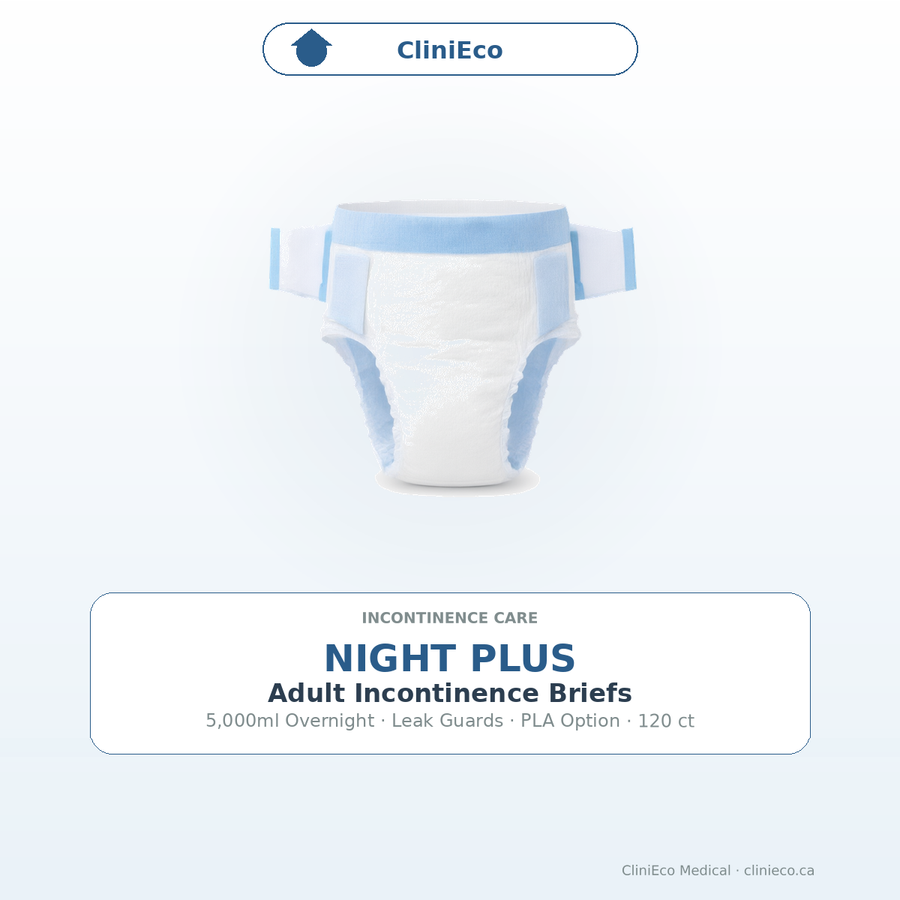
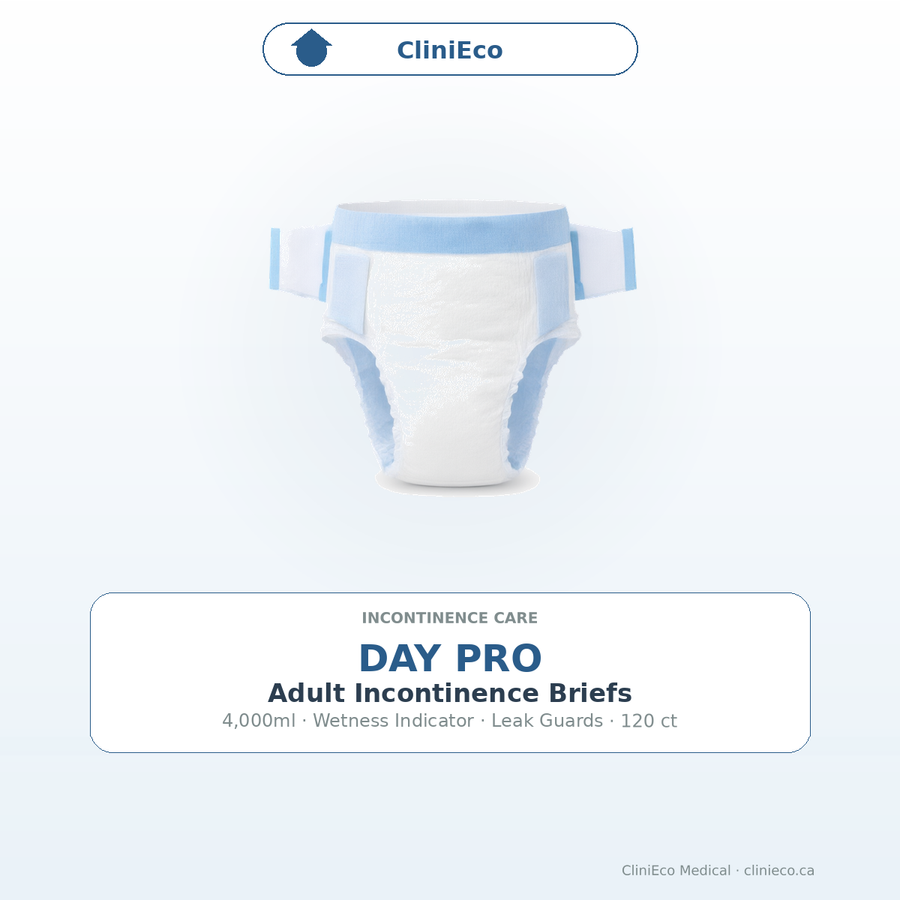
Start with the two layers that define the bed: one case of 36 × 80 in sheets and one case of 60 × 90 cm pads, plus a 4-pack of the 30 × 36 in pad if the floor turns residents on a schedule. Briefs are ordered by absorbency level rather than by floor. The 3,000 ml daytime brief, the 4,000 ml brief, the 5,000 ml overnight brief and the pull-on maximum each ship as a 120-count case, and the method for choosing between them is on the incontinence catalogue. Disposable washcloths and the urology care kit travel on the same order because they are consumed at the same moment as the bed change.
Related reading — adult diapers, underpads and the rest of the supply list, and the 60 × 90 cm pad in home care.
Frequently Asked Questions about bed sheets and underpads
These are the questions a purchasing office and a floor nurse ask most often when the two bed layers are moved onto one standing order.
What size is one disposable bed sheet?
36 × 80 inches, which is 91 × 203 cm, and both the non-woven and the PLA version are cut to that size. It covers a single bed, a treatment table, a stretcher or a massage table; a wider couch or a bariatric frame will leave an uncovered strip at the edge, so measure the surface before ordering a case.
How many sheets are in a case?
The non-woven case holds eight packs of 100, which is 800 sheets, and that is the unit a floor reorders. The PLA version ships as a 10-pack, and the sheet count inside each pack is printed on that product page, so confirm it there before a standing order is written against the case.
Can a disposable sheet be laundered and reused?
No. It is a single-use spun-bond sheet, and washing it collapses the fibre structure that holds the surface together, so it is bought as a consumable and discarded after one patient use. That is what removes the laundry cycle and the linen count-back from the shift.
Which underpad goes under a brief?
The 30 × 36 in pad sits under the hips and moves with the resident during a repositioning turn, and the 60 × 90 cm pad spans the bed underneath the brief for overnight protection. Most floors stock both, because the smaller pad protects during a turn and the wider pad protects the bed through the night.