
For Piercing Studios
A piercing studio handles two categories of item that never touch a cleaning sink: the needle, which is single use from an unopened pack, and the jewellery, which is either single use or reprocessed through a validated cycle before it touches a fresh piercing. Everything else on the station is barrier, glove or surface, and each has a format that decides whether the work can be documented.
-
Sterilization & Infection Control > Steril...$497.00
$597.00CAD


More about For Piercing Studios
Sterile, single-use consumables and sterilization monitoring for piercing studios — individually wrapped swabs and masks, autoclave pouches and indicators, sharps containers, surface barriers.
What do piercing studios need for needle and jewellery handling?
The needle side is specified rather than advisory. Ontario's O. Reg. 136/18 for personal service settings requires at section 10(6) that sharps used for invasive procedures be single use and come from packaging that has not been previously opened, damaged or compromised, and at section 10(7) that sharps be disposed of immediately after use into a sharps container located in close proximity to where the service is provided. A studio that pre-opens needles for a day's appointments has already broken the first rule, because the packaging is the evidence.
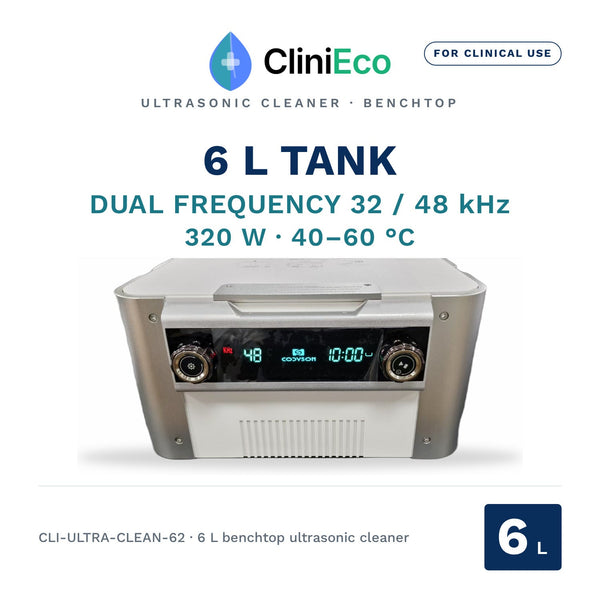
Jewellery follows a different path because it may be reprocessed. Section 10(4) requires reusable equipment to be cleaned and disinfected or sterilized between each use, and section 10(5) requires anything designed for single use, or made of a material that does not withstand reprocessing, to be discarded after use. That is why a studio needs both a cleaning step before reprocessing and a record of the reprocessing cycle, and why the ultrasonic cleaner in the workflow is a pre-cleaning step rather than a substitute for sterilization.
Two support items make the handling defensible. Section 11(1) requires products to be stored and dispensed in a manner that prevents contamination, which rules out decanting from a bulk container into an unlabelled bottle. Section 11(2) requires disinfectants to carry a drug identification number or natural product number assigned by Health Canada and to be used according to the manufacturer's instructions, with chlorine bleach as the only exception to the numbering rule.
Which glove and drape sizes / formats fit a two-artist studio?
Two artists means two sizes on the shelf and a case split that reflects it. Nitrile examination gloves in the 3.5 mil range are the usual format where gloves are changed between the clean and contaminated phases of a piercing, and a 1,000-glove case split across S, M, L and XL lets each artist draw their own size without a second purchase order. A case ordered in a single size is the most common first-order mistake in a studio this size.
Drapes and barriers are where a studio improvises and then cannot document. The workable pattern is a single-use cover for anything that cannot be reprocessed and is not introduced into the body, which is the option section 10(4)(b) describes. A 21 inch by 225 ft smooth table paper roll is the format that cuts into chair, trolley and armrest covers at whatever length the station needs, and it is replaced between clients rather than wiped. Disposable washcloths in a 500 per case count cover the small surfaces and the cleanup step that follows.
| Item | Format that fits a two-artist studio | Where it is used in the workflow |
|---|---|---|
| Nitrile examination gloves | 3.5 mil, 1,000 per case, S to XL | Changed between clean and contaminated phases of each piercing |
| Single-use barrier for chair and trolley | Smooth table paper, 21 inch by 225 ft, case of 12 rolls | Cut to length per station, replaced between clients |
| Disposable washcloths | 10 by 13 inch, 500 per case | Small surface wipe-down and cleanup |
| Face masks | 3-ply, ASTM barrier level stated, 250 per pack | Close work at the piercing site |
| Sharps containers | 1 quart, puncture resistant, fill line marked | Point-of-use disposal beside each station |
| Surface disinfectant | Health Canada registered, DIN or NPN on the label | Work surfaces between clients |
How do I keep cross-contamination under control without buying extra equipment?
Three routines carry it. The first is a one-way flow at the station: opened needles arrive on a clean tray, used instruments leave directly to a container or to the cleaning sink, and nothing returns. The second is cover rather than wipe: a fresh barrier cut from a roll costs less than the minute spent deciding whether a surface was properly cleaned. The third is a dedicated sink for reusable equipment, which Ontario requires at section 8(3) where reprocessing happens, and which must not be the hand wash sink.
The jewellery path is where a studio most often loses traceability. Reprocessed jewellery needs a record of the cycle it went through, and section 14(1) lists what a sterilization record contains: the name and type of sterilizer, the date and time of use, the equipment it was used on, preventive maintenance or repairs with a note of whether the unit functioned properly afterwards, and the results of checks or tests. Section 10(10) supplies the interval the record is proving, since where an inspector has not directed otherwise, sterilizers are checked and tested at least once every two weeks.
What should a first order look like (quantity per station / per week)?
The numbers below assume two artists, six piercings each per day and five days a week, with gloves changed twice per client and a fresh barrier per client. They are arithmetic on that assumption rather than a requirement, and a studio doing jewellery changes as well as piercings should scale the glove and barrier lines.
| Consumable | First order | How long it lasts at 6 piercings per artist per day |
|---|---|---|
| Nitrile examination gloves, 1,000 per case | One case, split across four sizes | Four to six weeks at two changes per client |
| Smooth table paper, 21 inch by 225 ft, 12 rolls | One case | Six to eight weeks with a barrier per client at two stations |
| Disposable washcloths, 500 per case | One case | Six to eight weeks |
| Face masks, 250 per pack | One pack | Three to four weeks for two artists |
| Sharps containers, 1 quart, 20 per case | One case | A year or more at this volume |
Where do I reorder, and how fast does it ship in Canada?
Reorder from the product pages below, each of which shows the case format it ships in. Delivery time and freight depend on destination and shipment weight, so the confirmed figure appears on the order confirmation rather than in a published table; a single case and a pallet to a remote postal code are different movements.
For a two-artist studio, the practical change is combining the barrier, glove and wipe lines into one order per quarter rather than three separate small ones, because the freight on three shipments usually exceeds the storage saved. Studios that want a standing schedule start from the institutional account enquiry page. In Quebec, any instruction card the studio prints itself should be in French, since the Charter of the French language requires inscriptions supplied with a product, including directions for use, to be drafted in French.
What should the studio be able to show an inspector?
Ontario's records requirements are specific enough to be checked against a folder. Section 14(1) lists sterilization records and disinfection records, with the disinfection record naming the disinfectant, its concentration, the date it was prepared where applicable, and the date by which it should be used. Section 3 requires written notice to the medical officer of health at least 14 days before operating and before adding services, section 4 requires inspection results to be posted as the inspector requests, and section 5 requires the name and contact information of the person seeking the service before the service is provided.
Two documents sit alongside those and are frequently missing. Section 10(3) requires the manufacturer's instructions for equipment used at the setting to be kept at the setting where the person providing the service can reach them, and section 13 requires the operator to undertake health and safety training when a medical officer of health or inspector requires it. Neither is a consumable, and both are the first thing an inspector asks for after the sharps container.
Which items does a two-artist studio reorder first?
- Nitrile examination gloves, 3.5 mil, blue, 1,000 per case in sizes S to XL for the two glove changes per piercing.
- Smooth table paper, 21 inch by 225 ft, case of 12 rolls cut into single-use barriers for chair, trolley and armrest.
- Disposable washcloths, 10 by 13 inch, 500 per case for surface wipe-down and cleanup.
- One-quart puncture-resistant sharps containers, 20 per case for point-of-use disposal at each station.
- Six-litre benchtop ultrasonic cleaner with dual frequency as the pre-cleaning step before jewellery is reprocessed.
CliniEco Medical distributes studio and clinic consumables in Canada under MDEL #35334. This page describes requirements published by the Government of Ontario and by Health Canada; the requirement that binds a specific studio is the one in its provincial regulation, its municipal licensing conditions and its own written procedure.